
What is the difference between branding and marketing?
Branding and marketing each answer a different question.
The question for branding is: who are we, and why should anyone care? Branding is about building meaning: ensuring that people understand who you are, what you stand for, and why they should trust you. Not just today, but tomorrow and the day after.
The question for marketing is: how do we reach the right people, at the right time, with the right message? Marketing is about creating momentum: reaching, engaging, convincing, and converting people. Campaigns, content, social media, SEO, GEO, and ads are all tools that generate visibility and action.
Both are important, but in practice, marketing is often perceived as more urgent—not infrequently under pressure from sales and management. Leads, sales, campaigns, content planning, deadlines: these are concrete things that are immediately on the table and measurable. Branding feels less urgent because its impact isn’t immediately clear. But less urgent doesn’t mean less important.
What are the benefits of branding?
I see this tendency to postpone branding—or to consider it something to tackle “when there’s more time and budget”—in many companies. At the same time, it is precisely this choice that ends up costing the most in the long run. If branding is left off the strategic agenda for too long, marketing becomes more difficult, more expensive, and less effective. Every new campaign will have to work harder than the last to achieve the same results.
Research confirms this pattern. Gartner’s CMO Spend Survey (2025) shows that 54% of CMOs prioritize performance marketing, compared to just 22% who prioritize brand marketing, while the same study demonstrates that the top-performing organizations invest proportionally more in brand building. Notably, 85% of CMOs say they do believe that investing in branding delivers business results. The gap between what people know and what they do is therefore significant.
Researchers Binet & Field have been exploring this tension between brand building and brand activation for years. They, too, have repeatedly concluded that brands that consistently invest in brand building, on average, build a stronger market position than brands that focus primarily on activation. Their recommendation: allocate approximately 60% of your marketing budget to brand building and 40% to activation.
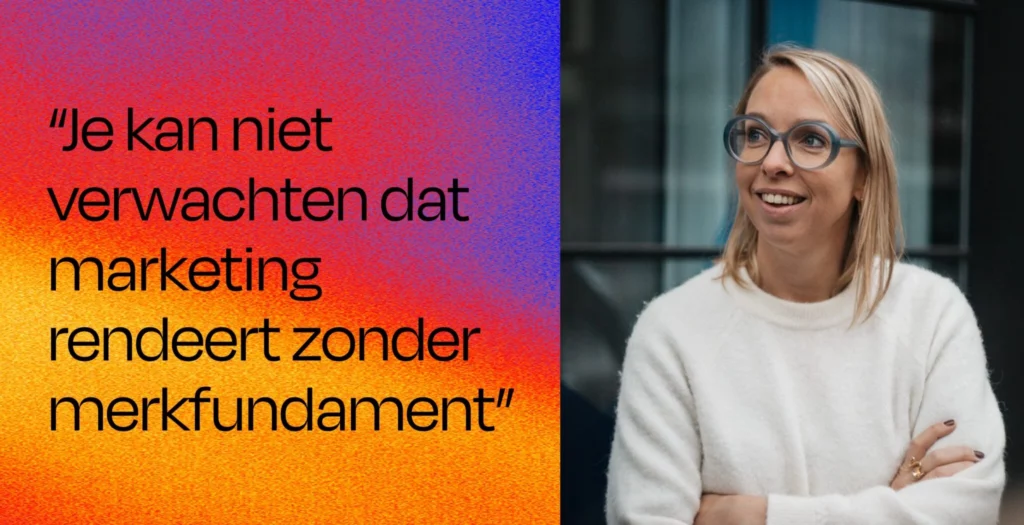
Branding makes marketing more efficient
A strong brand doesn’t make marketing unnecessary. It actually makes marketing more efficient and credible. Because if people already know who you are and what you do, you have less convincing to do in your campaigns. The message resonates faster because trust is already there. Customers who feel connected to a brand buy more often, spend more, and recommend the product or service in question to others more frequently because they understand what the brand stands for. (For those still looking for reasons to justify an investment in branding: start here!)
Perhaps you recognize one of these scenarios: you’ve been investing in marketing for years, but campaigns are yielding fewer and fewer results for no apparent reason. Or you have a strong story and a clear identity, but you’re unable to translate that into visibility and growth. At Studio Boiler, we see both scenarios come up regularly. And the solution rarely lies solely in branding, or solely in marketing.
What I have consistently observed over the years is that when there is a clear brand foundation (with sharp positioning, a credible story, and a consistent identity) everything else falls into place. Not just marketing activities, but also product development, recruitment, and sales conversations. A strong brand does its job even when you don’t have a campaign running.
Branding or marketing? It’s not a choice, but a sequence
Branding and marketing aren’t competitors, but they do follow a logical sequence.
You can’t communicate consistently about who you are if you don’t have a clear understanding of that yourself. You can’t build trust if your brand presents a different face on every channel. And you can’t expect marketing to deliver consistent results if there’s no foundation to support it.
Branding provides that foundation. It’s not a slower, softer, or prettier version of marketing. It’s the foundation that determines whether all those marketing efforts together build something that stands the test of time.
At Studio Boiler, we help companies build that foundation, with strategy, identity, and brand stories that provide direction. Curious about what that could mean for you?